The tradition
Madeira's plucked strings: from the braguinha to the ukulele
The small guitars of Madeira, how they travelled to Hawaii and became the ukulele, and where the island's plucked-string tradition meets a classical guitar concert.
Book the guitar concert ↗Quick answer
Madeira has its own family of small plucked instruments: the machete or braguinha with four strings, the five-string rajão and the nine-string viola de arame. Wikipedia names Madeiran cabinet makers who emigrated to Hawaii in the late nineteenth century as the first ukulele makers. A classical guitar concert in Funchal sits in the same family tree without playing those instruments.
A family of small guitars
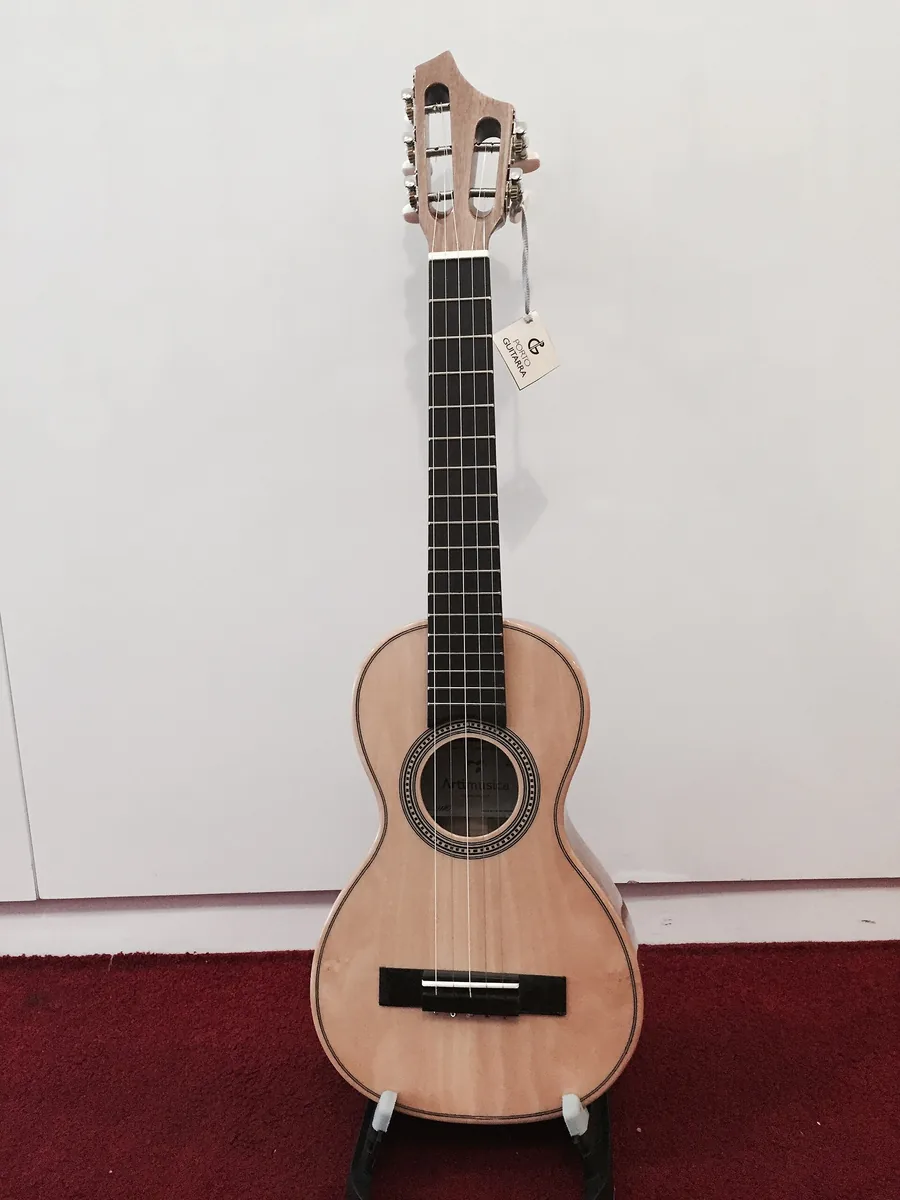
Visit Madeira lists the instruments of the island's folklore as the machete, the braguinha, the viola de arame, the triangle and a locally made instrument called the brinquinho. The first three are plucked. They are small instruments tied to the folk tradition: Visit Madeira calls the bailinho, a dance accompanied by singing and traditional instruments, the emblem of Madeiran folklore. They have little in common with a classical guitar except the family idea: strings, a wooden body and fingers.
The machete and the braguinha
Wikipedia calls the machete a small stringed instrument from Madeira, with four metal strings and a double-bulged body. It gives the Portuguese name machete de braga and says historians believe the instrument came to Madeira from Braga, which is why it is also called the braguinha. Its cousin the machete de rajão is slightly larger and has five metal strings. Wikipedia describes the machete as a possible predecessor of the ukulele. The ukulele article adds that the cavaquinho is also commonly known as the machete or braguinha.
The viola de arame
The viola de arame is the bigger voice among the Madeiran plucked instruments. Wikipedia describes it as a stringed instrument from Madeira, with nine strings in five courses, sometimes ten, made of steel and tuned to open G major. It is also called the viola da Madeira. The article lists a family of related violas from other parts of Portugal and Brazil, which shows how widely the type has travelled. Wikipedia cites the SAGE International Encyclopedia of Music and Culture as its source for these details.
From Funchal to Honolulu
The ukulele article on Wikipedia says the instrument is based on several small guitar-like instruments of Portuguese origin, the machete, the cavaquinho and the rajão, brought to the Hawaiian Islands by Portuguese immigrants from Madeira, the Azores and Cape Verde. It names three Madeiran cabinet makers, Manuel Nunes, José do Espírito Santo and Augusto Dias, as the first ukulele makers. A Hawaiian newspaper reported Madeiran street concerts two weeks after the Madeirans stepped off the SS Ravenscrag in late August 1879.
What the name means
Wikipedia says that in the Hawaiian language the word ukulele roughly translates as jumping flea. One legend credits the nickname to Edward William Purvis, an officer of King Kalākaua, because of his small size, fidgety manner and playing skill. The article also credits the ardent support of King Kalākaua for the instrument's adoption in Hawaiian music. The story shows how a Madeiran village instrument became a global one within a few decades.
Where the classical guitar fits in
A classical guitar concert in Funchal does not play these instruments. The Funchal Guitar Quartet is a chamber group that specialises in classical guitar, says the booking page. But Madeiran and Portuguese folk tunes can be played on any plucked instrument. A DNoticias preview describes the quartet's programme as running from Portuguese traditional and popular music to contemporary compositions. So a melody born on a braguinha can end up on four nylon-string guitars in a church. Wikipedia's article on the music of Portugal adds that music in Madeira is widespread and mainly uses local instruments such as the machete, rajão, brinquinho and cavaquinho, played in dances like the bailinho.
How to hear the real thing
To hear the machete, braguinha and viola de arame in their own setting, look for a folklore group. Visit Madeira says the island's folk groups, linked to the Casas do Povo, usually perform at cultural events and traditional festivals, and that groups often parade along Funchal's avenues on festival days. Read each event's booking page for what it offers. For the quiet, seated classical guitar hour in a Scottish church, the concert in this guide is the one to book.
Frequently asked questions
What is a braguinha?
A small four-string instrument from Madeira, also called the machete. Wikipedia says historians believe it came to Madeira from Braga.
Did the ukulele come from Madeira?
Wikipedia says the ukulele is based on small Portuguese instruments, the machete, cavaquinho and rajão, brought to Hawaii by immigrants from Madeira and elsewhere, with three Madeiran cabinet makers credited as the first makers.
How many strings does a rajão have?
Five metal strings, according to Wikipedia. It describes the machete de rajão as slightly larger than the machete.
Will I hear these at the guitar concert?
No. The quartet plays classical guitars. Some of the music may have folk roots.
Sources